
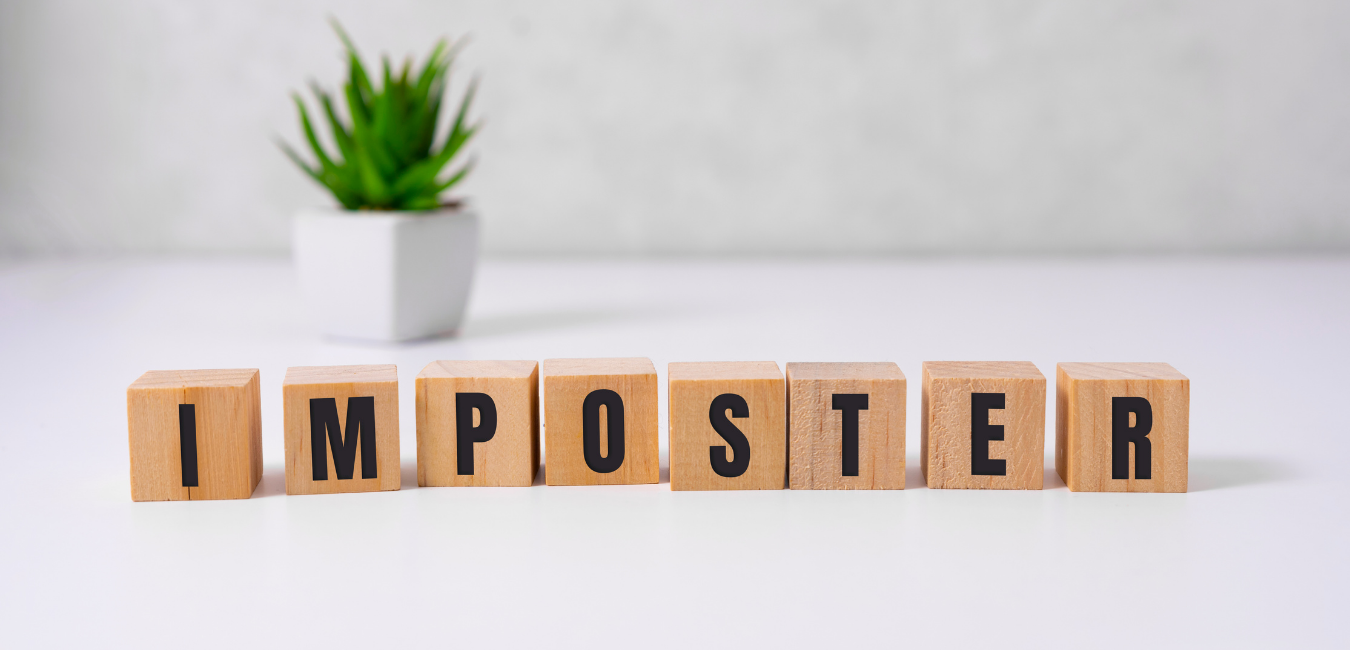
What actually is imposter syndrome?
The term was first used by psychologists Suzanna Imes and Pauline Rose Clance in the 1970’s. Back then it was thought to only really effect high-achieving women but now is has been recognised to effect anyone.
Imposter syndrome is basically feeling like you are a fraud, you are not really who you say you are, you can’t really do what you say you can do and at any moment you could be found out!
What are some of the characteristics of imposter syndrome?
Sabotaging your own success – putting things off because you don’t feel like you can achieve
Fear that you won’t be good enough – worried that others will think you are no good or don’t know what you’re talking about
Setting goals that are unrealistic – not being able to achieve these goals then leads to proof that you really are a fraud
Self-doubt – always thinking that you can’t, believing that you are not good enough and down playing your achievements
A small amount of imposter syndrome can be helpful to motivate you to prepare, work hard and do well to ‘prove’ them wrong but generally it causes major anxiety. The need to work so hard and over prepare so you’re not found out.
And of course, if you managed to ‘fool’ them because of all that hard work that’s the only reason you did! So next time you have to work just as hard if not harder!
No matter how much evidence you have to prove that you are in fact worthy and deserve your success and not a fraud, this evidence is not enough to change your thoughts.
The thoughts and therefore feelings of imposter syndrome come from your core beliefs about yourself and they are strong.
Most people don’t open up about these feelings, they keep them hidden because of course someone may agree with you right?
They suffer in silence until eventually it can lead to depression and of course this means that an inability to do the job can become real, not because you don’t have the skills and ability to actually do it but the anxiety and depression stops you doing it to as your best self.
Imposter syndrome is one of the number one reasons I see people for coaching. A lot of the time people don’t even realise they have imposter syndrome!
Once they find out and we work together on changing those beliefs massive shifts start to happen!
If you recognise any of these characteristics please do get in touch for a chat to find out if it in fact is imposter syndrome and how I can help.



Leave A Comment